


By: Ewen Bonnyman, HR Systems Implementation Lead, MJV Consulting Ltd
Category: HR Technology | HR Software for Small Business UK
If you’re managing HR on spreadsheets and email threads, you’re not alone — but you’re carrying a risk that a good system removes almost overnight.
Most small business owners don’t think about HR software until something goes wrong. A missed right-to-work check. A holiday dispute with no paper trail. A manager spending half their Friday chasing absence forms instead of running their team.
This guide simplifies all you need to know on HR software and what it actually does, what it costs, and whether the investment makes sense for your business right now.
In this article:
- What an HRIS is and whether small businesses genuinely need one
- The hidden cost of managing HR manually and where it adds up fastest
- How platforms like Breathe HR, Employment Hero, and Cezanne HR compare for SMEs
- What a realistic implementation looks like, and how long it takes
For most UK small businesses with ten or more employees, the answer is yes. An HR system – formally known as a Human Resource Information System, or HRIS – removes time-consuming admin from manual processes, significantly reduces compliance risk, and typically pays for itself within the first year. This guide explains what an HRIS is, what it can do for your business, and how to decide whether now is the right time to implement one.
What is an HRIS and do small businesses need one?
An HRIS is a software platform that centralises your people data and automates routine HR tasks – from storing employee records and tracking annual leave, to managing onboarding and generating employment documents. Until relatively recently, these systems were largely the preserve of larger organisations. That has changed.
Today, platforms like Breathe HR, Employment Hero, and Cezanne HR have been built specifically with small and medium-sized businesses in mind. They are affordable, intuitive, and scalable – designed to grow alongside your team, not just serve a corporate headcount.
If your business is still managing HR through a combination of spreadsheets, shared drives, and email threads, you are not alone. But you are also carrying a risk that a good HRIS eliminates almost immediately.
When should a business implement HR software?
There is no single trigger point, but there are clear signals. Most HR consultants – ourselves included – suggest businesses start evaluating HR software options when they reach ten employees. At that stage, the volume of people admin tends to outpace what a spreadsheet can sensibly handle.
Other common prompts include:
- You have experienced a compliance near-miss – a missed right-to-work check, an undocumented disciplinary, or a payroll error caused by holiday miscalculation.
- A manager is spending several hours each week on HR admin rather than leading their team.
- You are scaling quickly and need consistent, auditable processes in place before headcount grows further.
- You are preparing for an investor round or acquisition and need clean, evidenced people records.
If any of these resonate, it is worth speaking to our HR System experts who can help you identify the right platform for your specific situation.
What HR processes can software automate?
This is where the genuine return on investment becomes visible. A well-configured HRIS takes repetitive, time-sensitive tasks off your plate and delivers them consistently, every time. The most impactful areas of automation for small businesses include:
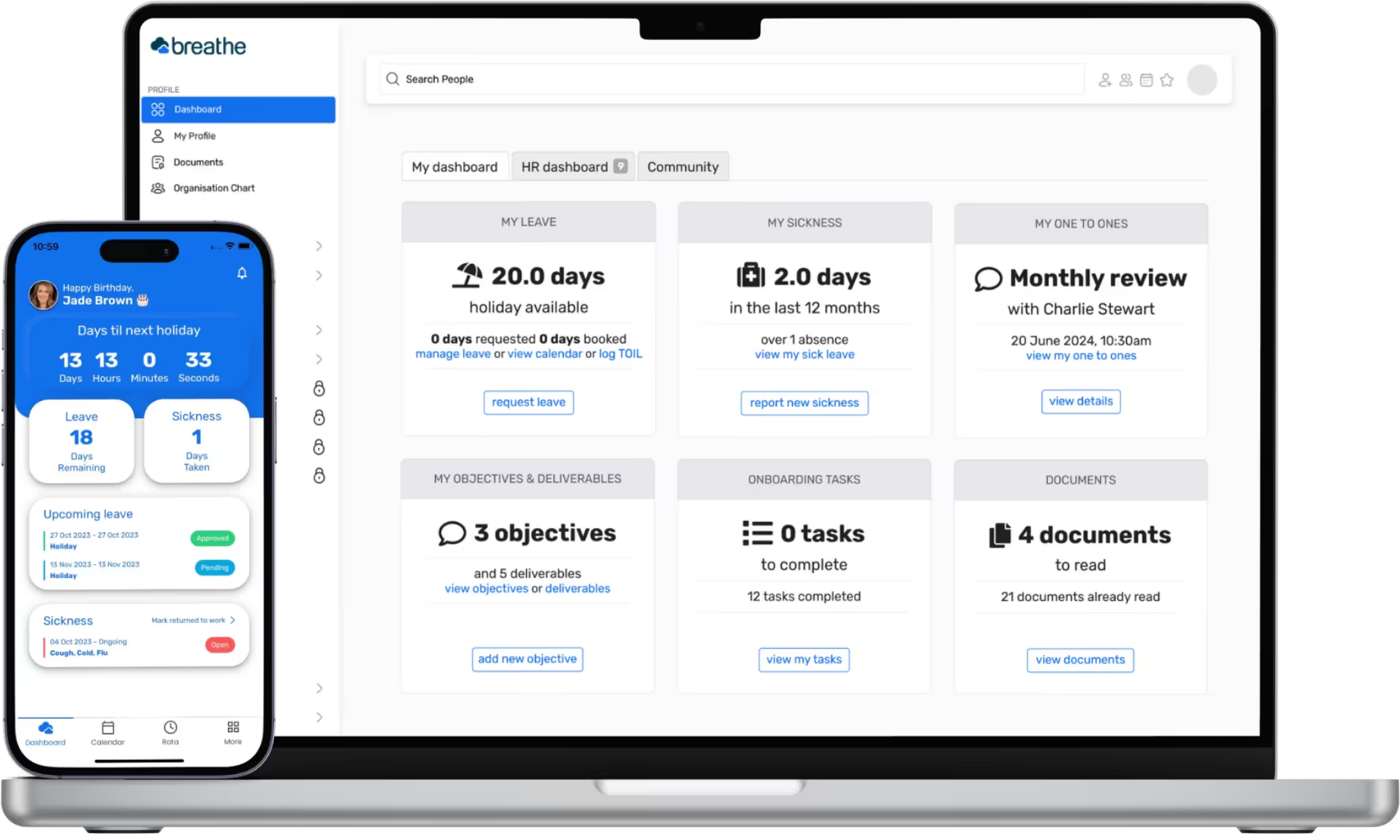
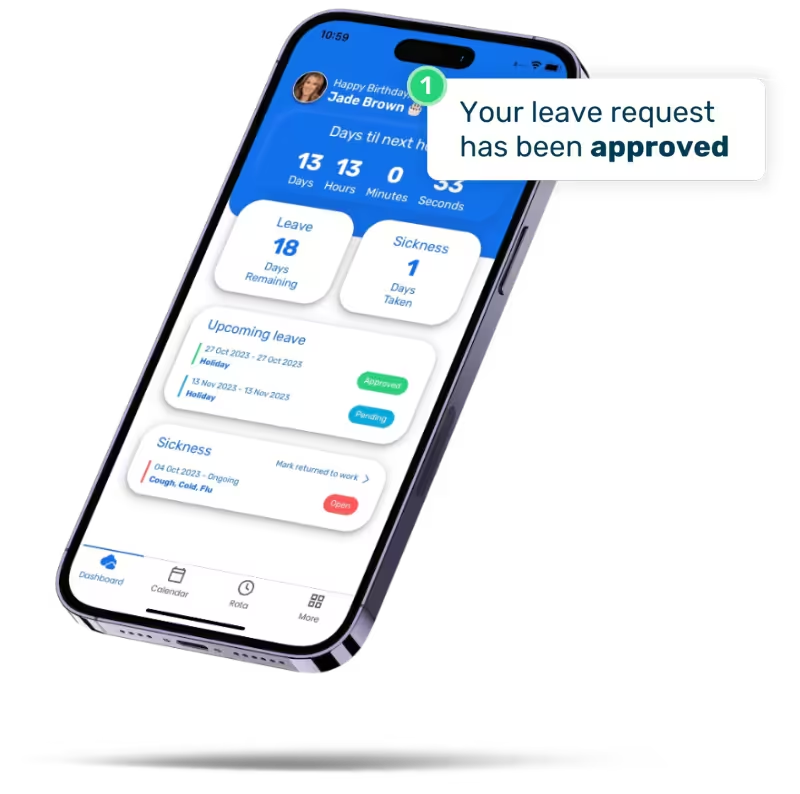
- Holiday and absence management – employees self-serve requests; managers approve digitally; records update automatically
- Onboarding workflows – contracts, right-to-work checks, and first-week tasks are issued and tracked without manual chasing
- Document storage and compliance – employment contracts, policies, and disciplinary records stored securely in one place with a full audit trail
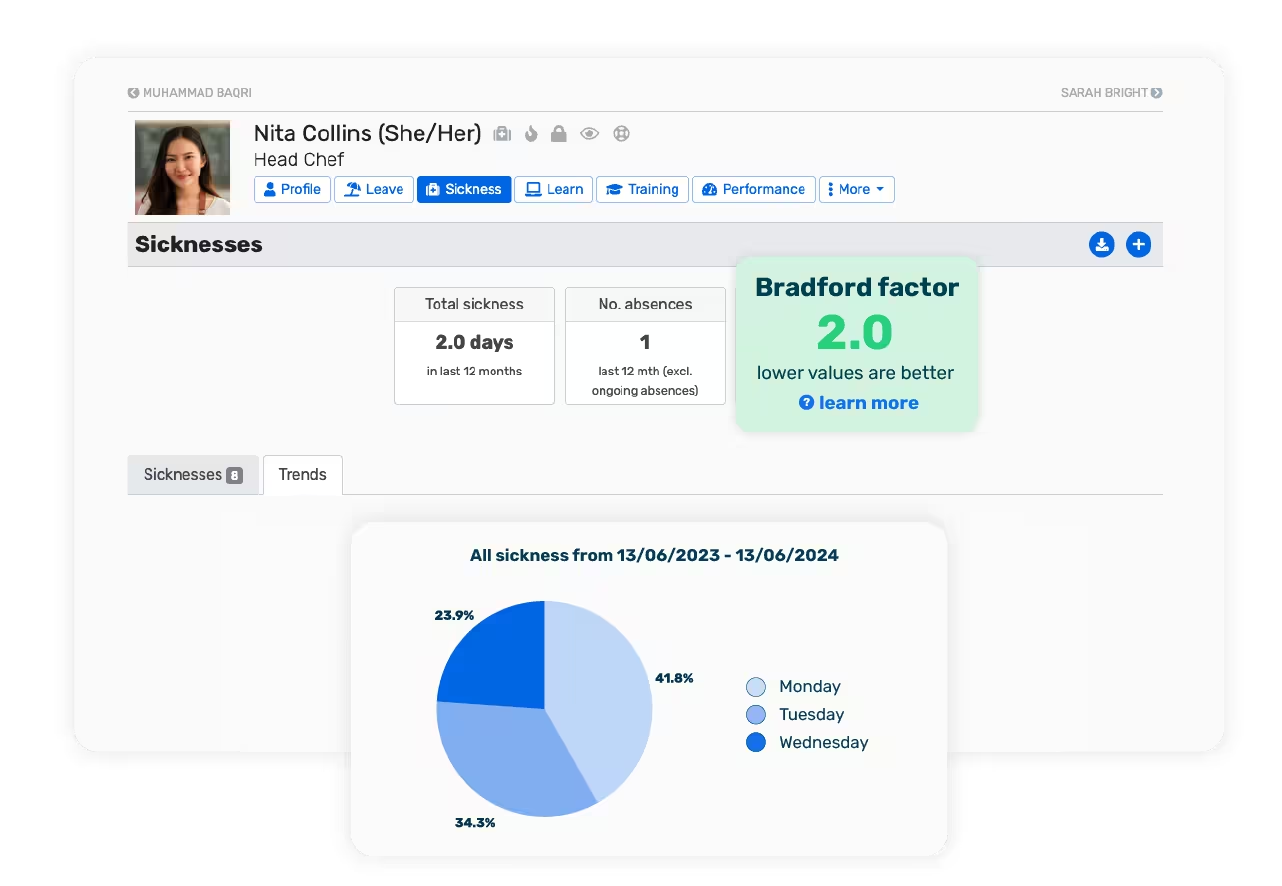
- Sickness tracking – automatic Bradford Factor calculations and absence trend reporting, removing the need for manual logging
- Performance reviews and one-to-ones – scheduled, documented, and accessible to both manager and employee
- Reporting – headcount, turnover, and absence data available on demand for management meetings or board packs
In a team of 20, even recovering two hours of admin time per week across management represents over 100 hours per year – time that can be redirected to growing the business.
Manual HR vs HR software: what is the real cost?
The most common objection to HR software is cost. But this framing misses the question that matters more: what is the current cost of doing it manually?
Consider a business with 25 employees. A manager spending three hours a week managing holiday requests, absence tracking, and HR paperwork is costing the business approximately 150 hours per year in management time. At a fully-loaded cost of £30 per hour, that is £4,500 annually – before you factor in the risk of a single employment tribunal claim, which the Chartered Institute of Personnel and Development (CIPD) estimates costs UK businesses an average of £8,500 to defend, regardless of outcome.
The compliance argument is equally compelling. The Employment Rights Act 2025 introduces further obligations for UK employers around statutory sick pay, flexible working, and employee record-keeping – all of which are significantly easier to manage with an HRIS in place. If you are unsure how these changes affect your business, our guide to the Employment Rights Act 2025 is a useful starting point.
How much does HR software cost for SMEs in the UK?
Pricing varies by platform and headcount, but the following gives a realistic picture for small businesses:
- Breathe HR – from approximately £24 per month for up to ten employees, scaling to around £99 per month at 50 employees. Strong on simplicity and holiday management. MJV Consulting is an accredited Breathe Gold partner.
- Employment Hero – pricing starts from around £7 per employee per month on its HR-only tier, with an all-in-one tier combining HR, payroll, and benefits. Particularly well suited to businesses looking to reduce payroll administration alongside HR.
- Cezanne HR – designed for businesses from around 100 employees upwards, with modular pricing based on the functionality required. A strong choice for businesses with more complex HR structures or multi-site operations.
Most platforms offer free trials and will provide a demo on request. MJV Consulting offers independent HRIS consultancy to help businesses compare platforms without vendor bias – we will only recommend a system if it genuinely fits your needs.
What does HRIS implementation look like in practice?
Implementing HR software does not have to be a lengthy project. For most small businesses, a straightforward implementation on a platform like Breathe HR can be completed within four to six weeks. The key stages are:
- Scoping your requirements – identifying which processes you want the system to handle from day one
- Data migration – transferring existing employee records cleanly into the new system
- Configuration – setting up approval workflows, leave policies, and document templates to reflect your business
- Team training – ensuring managers and employees can use the system confidently
- Go-live and review – launching, monitoring, and refining over the first 30 to 60 days
Working with an HR consultant who is also an accredited platform partner means you have expert support across both the HR and the technical side of the implementation – and someone to call when questions come up after go-live.
Is HR software worth it for your small business in Sussex and Surrey?
For businesses across Sussex and Surrey – whether you are a professional services firm in Guildford, a manufacturing business near Crawley, or a growing agency in Brighton – the question is rarely whether you need an HR system. It is usually when.
The businesses we support at MJV Consulting that have made the switch consistently report the same outcomes: less time on admin, greater confidence in their compliance position, and a more consistent employee experience. For most, the return on investment is visible within three to six months.
If you are weighing up the options and want an honest, independent view – without being sold a platform – get in touch with the MJV Consulting team. We support businesses with HR strategy, HRIS implementation, and ongoing HR advice across West Sussex, East Sussex, Surrey, and London.
Ready to find the right HR system for your business? MJV Consulting offers independent HR software advice and full HRIS implementation support for small businesses across Sussex and Surrey. Book a free 30-minute discovery call today.
About the author: Ewen Bonnyman is the Operations Lead and HR Systems Implementation expert at MJV Consulting Ltd, an independent HR consultancy based in Horsham, West Sussex. With over 25 years of HR experience supporting small and medium-sized businesses across Sussex, Surrey, and London, MJV helps business owners build people processes that are practical, compliant, and built to grow with them. MJV Consulting is an accredited partner for Breathe HR, Employment Hero, and Cezanne HR.